Convert your official TXT file
Use the free ICD-10-CM CSV converter to turn the full order or code-description TXT into a spreadsheet on your device. It preserves the source descriptions and does not upload the file or verify its release.
Start with the publisher package, not a file extension
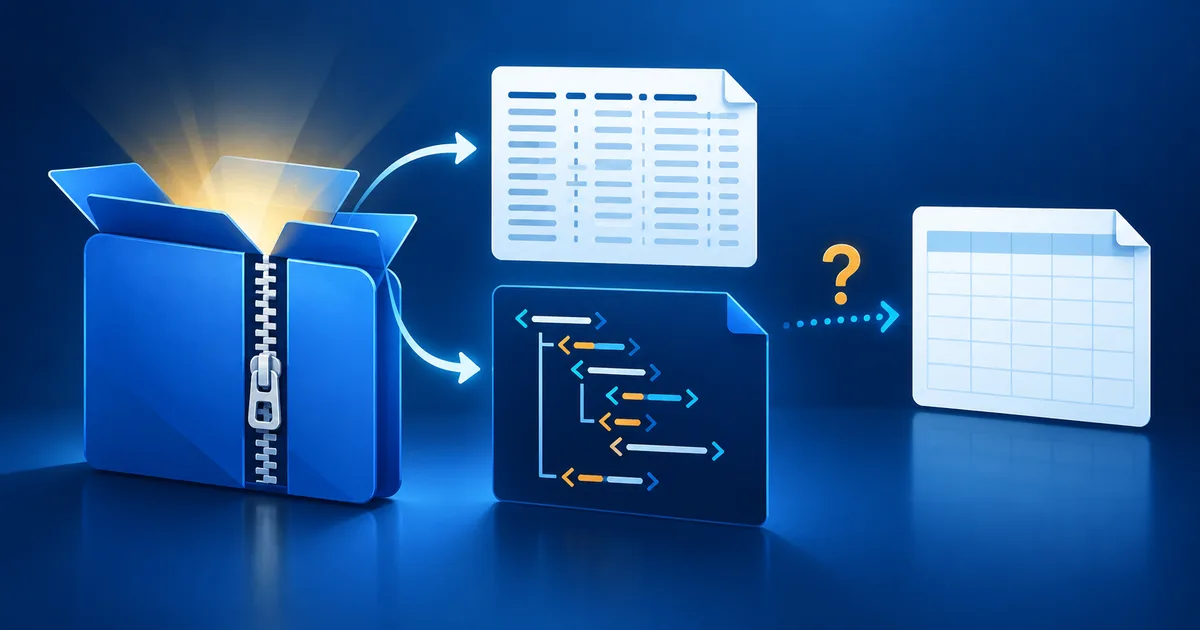
On October 29, 2026, the CDC/NCHS FY2027 archive and CMS ICD-10 files page did not list a standalone FY2027 ICD-10-CM CSV download. The CDC code-description ZIP contained icd10cm-codes-2027.txt, icd10cm-order-2027.txt, matching addenda text files, and explanatory PDFs. A third-party CSV may be useful for analysis, but it is not the source format we verified in that official package. Recheck the publisher listing if the files change after this inspection.
This is a format question, not a verdict on every file that uses a .csv extension. The right source depends on whether you need code titles, hierarchy, complete-code flags, instructions or changes. The versioned FY2027 source library keeps the release context visible.
Which official file answers which data question?
Codes TXT: use icd10cm-codes-2027.txt for the released list of complete diagnosis codes and short titles. Order TXT: use icd10cm-order-2027.txt when the display order and complete-versus-heading flag matter. Its rows include both complete codes and nonreportable headings. Full Tabular and Index: obtain the corresponding FY2027 package from CDC/NCHS for hierarchy and instructions; a code-title text file cannot represent all of that meaning.
For example, the official order file retains I42.0 as a heading with flag 0, while I42.00 appears as a complete code with flag 1. Flattening both into a single “billable codes” CSV would misstate one row. The I42.0 order-file example shows the exact source lines without recommending a diagnosis assignment.
If your workflow needs CSV, preserve provenance
- Download the original ZIP from the CDC/NCHS FY2027 directory and record its URL and retrieval date.
- Choose one member deliberately: codes TXT and order TXT represent different populations of rows.
- Read the publisher's accompanying file-layout PDF before parsing fixed positions; do not split descriptions on spaces.
- Keep code strings as text so punctuation and leading characters survive. Retain the order-file complete-code flag as its own field.
- Label the output “derived from CDC/NCHS FY2027 ICD-10-CM [exact member name], converted on [date].” Keep the unmodified ZIP for audit.
- Validate row counts, a small set of known entries, and parent/child distinctions against the source and full Tabular hierarchy.
A derived CSV can help indexing or internal analytics. It should not be presented as a CDC-issued CSV or as a replacement for the official classification. The source-file comparison guide gives the broader map.
Do not mix FY2027 with the April FY2026 update
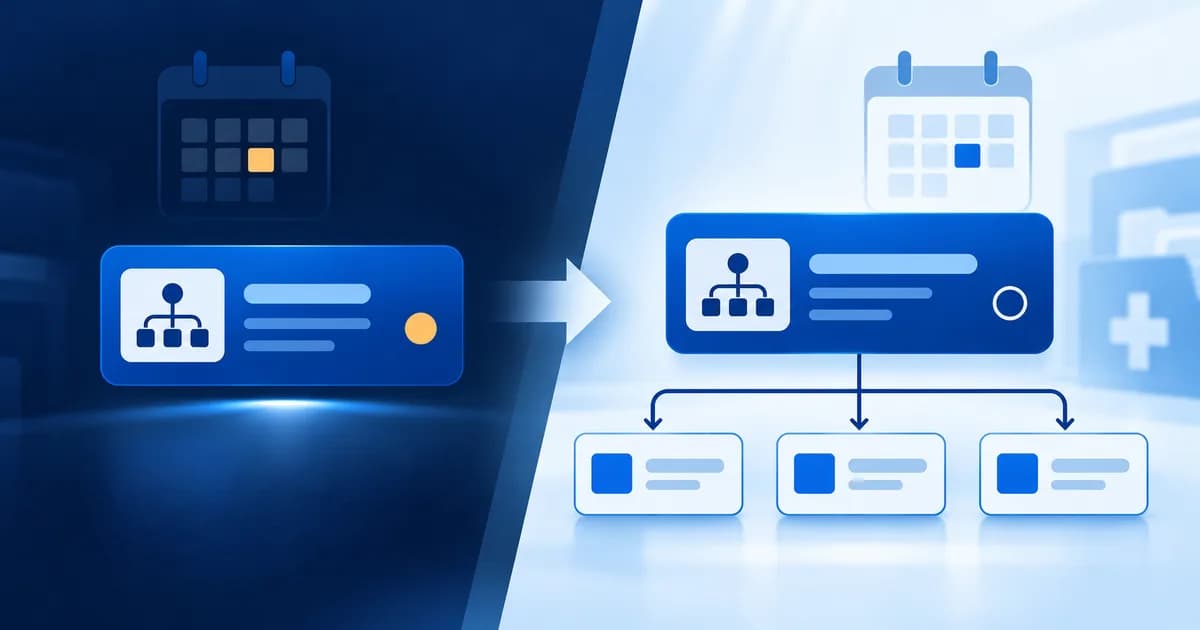
FY2027 applies from October 1, 2026 through September 30, 2027, subject to later official updates. The preceding FY2026 April update applies April 1 through September 30, 2026. Their archives are separate. If an internal export covers both periods, include a release column or use separate tables. Otherwise, a code row can look current while its effective dates are wrong. Check the CDC/NCHS release dates and the CMS file page before importing.
Our April Tabular XML guide identifies the earlier XML package and its exact member name. A CSV conversion should never silently merge that older XML with FY2027 code descriptions.
What a CSV cannot safely replace
Even a perfectly parsed table of codes and titles lacks the complete Index-to-Tabular route, inherited notes, and setting-specific guidance. It does not read a clinical record. Use the official FY2027 guidelines and full released classification for a real coding review. If a CSV appears on another website, check its publisher, fiscal year, transformation rules and update date before relying on it. A convenient download format is not evidence of official status.
Source: CMS: ICD-10-CM diagnosis files
Common questions
Does CDC publish the FY2027 code list as CSV?
The FY2027 CDC/NCHS directory we checked on October 29, 2026 listed the code-description ZIP with TXT members, not a standalone CSV. Recheck the official directory for later changes.
What is the difference between codes TXT and order TXT?
The codes TXT lists complete diagnosis codes. The order TXT also includes headings and a flag that distinguishes them, making it suitable for browsing a hierarchy.
Can I turn the official TXT into CSV?
Yes, for an internal derived dataset, if you follow the publisher's file layout and retain source URL, release and conversion date. The resulting CSV is your transformation, not a CDC-issued CSV.
Can a code-title CSV replace the Tabular List?
No. The official FY2027 release and guidelines carry instructions and context that a flattened code-title list cannot supply.
Sources & editorial notes
- CDC/NCHS: FY2027 official release directory
- CDC/NCHS: FY2027 code descriptions ZIP
- CMS: ICD-10-CM diagnosis files
- CMS: FY2027 coding guidelines
Educational reference content, prepared with AI assistance; not independently reviewed by a credentialed clinical coding specialist. Verify official instructions and the applicable documentation before assigning codes. Our editorial approach.
Found an error? Send a correction.